
Biography
Regardless of the length of life, a résumé is best kept short, concise… Of all your loves, mention only the marriage… Memberships in what but without why… Write as if you'd never talked to yourself and always kept yourself at arm's length.
So, Ingar Palmlund was born in 1938, in Lund, Sweden. She was married for twelve years, long ago now. Has two children and a handful of grandchildren, all of them no longer children. Worked for twenty years in the Swedish civil service and even longer as an independent scholar.
Earned a Ph.D. (Environment, Technology, Society) at Clark University in Worcester MA, USA in 1990 on her dissertation The Case of Estrogens: An Enquiry into Societal Risk Evaluation. Has been affiliated as visiting scholar or lecturer at several universities, Associate Professor at Linköping University, Sweden, and has taught international environmental politics and sustainable development at Tufts University, USA.
Her memberships have included an office workers' union, a Social Democratic party, an Amnesty International group and Women's International League for Peace and Freedom. She supports UNICEF, UNHCR and Save the Children. She has walked in protest marches against wars and political oppression. She speaks several Indo-European languages and has lived in many countries — Sweden, France, The Netherlands, Pakistan, and in the USA in Massachusetts. Her home is now in London in the UK.
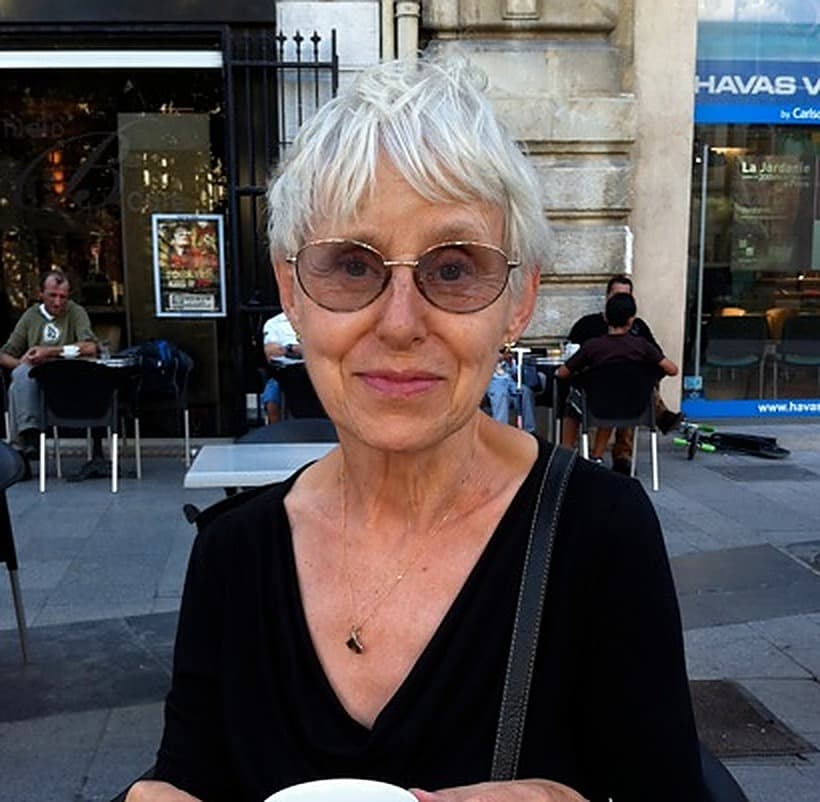
Born under the sign of Aquarius in a Chinese Year of the Tiger, she carries in her necklace a little gilt leaf from a Gingko Biloba tree. This tree is a living fossil from the middle Jurassic era some 170 million years ago. Its genome has 10.6 billion DNA nucleobase “letters” (the human genome has three billion) and about 41,840 predicted genes carrying antibacterial and chemical defence mechanisms. Its leaf, a small open fan, is a marvel of simplicity, a symbol of survival against all odds.
Ever curious, she likes poking into mysteries and to learn. Whether we are aware of it or not, no matter disappears, nothing ever turns to nothing. It only shifts from one place to another, becomes part of other constellations. By working with environmental information, she came to see the importance of identifying specific chemical compounds, documenting their characteristics and effects, locating them in space, and finding out about how they affect living bodies and oikos, the earthly home that surrounds us and shapes our lives and our future.
Reading and writing has paved her way through school, university and in professional life. Working in the borderland between social sciences and life sciences, much of her reading, writing and teaching has concerned the handling of risks to human health and environment.
To read is an easy way to learn to think in new directions about the world and how to live. For her, to write is even more magic, a challenge loaded with discoveries, a way of being, of searching, as she links word to word to word to shape images of what is or what was or what might be, a way of trying to understand life and living.